[1] There's an ongoing debate about whether it's OK to call the
digital conflict happening now in Ukraine, a "
cyberwar" — or if using that term makes you guilty of making something larger than it is in the midst of a tragedy.
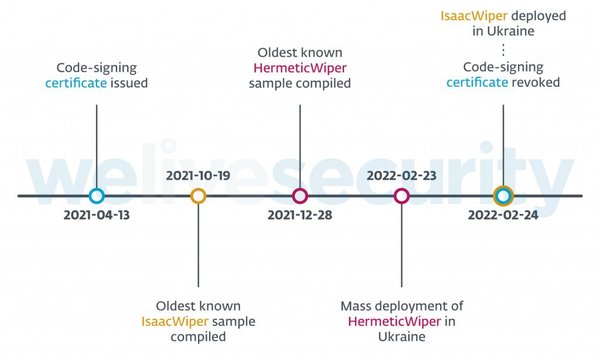
Setting aside the senseless, heart-breaking devastation and loss of life caused by Russia's unprovoked military aggression against Ukraine over the past week, there are disturbing indications that cyber assaults against civilian targets have been worsening as well.
[2] Over the last five years or so, due to the emergence of advanced 2.5D and 3D packaging,
chiplets have emerged as a new level of abstraction in chip design.
Today, the
industry consortium announced the UCIe as a new die-to-die interconnect to provide an open, multivendor chiplet ecosystem. More specifically, the ratified UCIe 1.0 specification covers the physical I/O layer, die-to-die protocols and a software stack that leverages the existing PCIe and CXL industry interconnect standards (although other protocols could also be used in principle). In addition, there is even support for inter-board interconnection: In the future, the industry expects to be able to connect different boards at the package level using co-packaged or even integrated photonics.
>> Read more. [3] Companies have long sought technologies that promise an advantage
in fighting litigation. For most enterprises, casework is a major drain on resources. In 2020, U.S. businesses spent a total of $22.8 billion dollars on litigation; law firm Fulbright & Jaworski estimated in 2005 that nearly 90% of businesses are engaged in some type of
litigation and that the average company balances a docket of 37 lawsuits.
With the
democratization of AI and analytics tools, it was perhaps inevitable that startups would begin applying predictive techniques to the legal field — particularly given the enormous market opportunity. (According to Statista, the legal tech segment's revenues could reach $25.17 billion in 2025.) For example, Ex Parte, a predictive analytics company founded by former lawyer Jonathan Klein, claims to use AI and machine learning to predict the outcome of litigation and recommend actions companies can take to "optimize their odds of winning."
>> Read more. 







No comments:
Post a Comment